Waco Suspension Bridge, Waco, TX: Location, Length, Height, Toll, History & Facts
Waco Suspension Bridge was first crossed by cowboys herding longhorns up the Chisholm Trail. When it opened in January 1870, it was the first bridge of any kind across the Brazos River and the first major suspension bridge in Texas. Its 475-foot span was among the longest suspension spans west of the Mississippi. Built with nearly 3 million bricks and steel cables from the Roebling company, the firm later famous for the Brooklyn Bridge, it helped turn Waco from a frontier village into a busy crossroads. Today it’s a beloved pedestrian bridge at the heart of downtown Waco. After a full restoration, it reopened in April 2023 with a ceremonial longhorn cattle drive. It’s free to walk across.
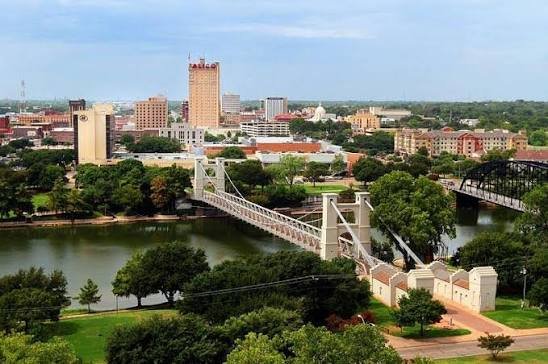
Waco Suspension Bridge Key Facts
| Detail | Information |
| Location | Brazos River, downtown Waco, Texas, between Indian Spring Park and Martin Luther King Jr. Park |
| Coordinates | Approx. 31.5613° N, 97.1271° W |
| Owner | City of Waco |
| Bridge type | Single-span, two-tower suspension bridge |
| Engineer | Thomas M. Griffith |
| Cables | Supplied by John A. Roebling’s company of Trenton, New Jersey |
| Builder | Waco Bridge Company |
| Construction began | October 1868 |
| First tolls collected | January 1, 1870 |
| Grand opening celebration | January 6, 1870 |
| Original cost | About $141,000 |
| Main span | 475 ft (145 m) |
| Deck width | About 18 ft |
| Bricks used | Nearly 3 million |
| Major rebuild | 1913–1914 (new steel cables and structure) |
| Pedestrian-only since | Early 1970s |
| Latest restoration | 2020–2023, about $12.4 million |
| Rededicated | April 22, 2023 |
| Historic status | National Register of Historic Places |
| Toll | None (tolls ended after 1889) |
| Time zone | Central Time: UTC−6 (CST), UTC−5 (CDT, second Sunday in March to first Sunday in November) |
In the Heart of Downtown Waco
The Waco Suspension Bridge crosses the Brazos River just east of downtown Waco, near the spot where the original Waco Springs once flowed. On the west bank, it starts in Indian Spring Park, beside downtown. On the east bank, it reaches Martin Luther King Jr. Park, along the Brazos Riverwalk.
The bridge is the centerpiece of a string of riverside parks that host concerts, festivals, sporting events and weddings. A herd of bronze longhorn statues near the west end of the bridge recalls the cattle drives that once crossed here.
Bricks, Towers and Cables
The Waco Suspension Bridge is a classic single-span suspension bridge, with two brick towers holding up the main cables that support the deck.
- The main span between the towers is 475 feet.
- The deck is about 18 feet wide.
- The towers and anchorages were built with nearly 3 million bricks, many made locally.
- When the bridge was rebuilt in 1913–1914, the brick towers were covered in stucco, giving them a smoother, more modern look.
- The 2023 restoration added a new concrete main deck and tropical hardwood sidewalks.
Engineer Thomas M. Griffith had worked with John A. Roebling, the leading suspension bridge builder in America at the time. Griffith used Roebling-made cables and Roebling’s suspension techniques to design the Waco bridge. Roebling’s company went on to complete the Brooklyn Bridge in 1883.
Free to Cross
There’s no toll on the Waco Suspension Bridge today. It’s open to pedestrians and cyclists, and it’s one of Waco’s favorite places for a stroll. Tips for visiting:
- The walk across takes only a few minutes, but most visitors linger to enjoy views of the Brazos River and the downtown skyline.
- The bridge connects with the Brazos Riverwalk, a trail that follows the river through Waco.
- Sunset and early evening are popular times, when the bridge and parks are lit.
- The parks on both ends often host festivals and concerts, especially on the Fourth of July and during summer events like “Brazos Nights.”
A Bridge for the Chisholm Trail
Before the bridge, the only way across the Brazos at Waco was by ferry or by fording the river. As cattle drives along the Chisholm Trail grew, Waco business leaders saw the need for a permanent crossing. In 1866, members of Waco Masonic Lodge No. 92 helped form the Waco Bridge Company, which received a state charter to build a toll bridge.
The company hired Thomas M. Griffith of New York to lead construction. Work began in October 1868. Materials were hard to come by on the Texas frontier, and much had to be hauled in by ox wagon. Bricks were made locally, and the steel cables were shipped from Roebling’s company in New Jersey.
The bridge collected its first tolls on January 1, 1870, and Waco celebrated its grand opening on January 6, 1870. At the time, Waco had only a little over 3,000 residents.
Cowboys, Cattle and Tolls
The bridge charged tolls for people, wagons and animals, including the huge herds of longhorn cattle driven north on the Chisholm Trail toward the railroads in Kansas. The steady flow of cattle and travelers helped the bridge company pay off its costs quickly, and Waco became a key crossing point for north–south travel across Texas.
In 1889, McLennan County bought the bridge for $75,000. The county then sold it to the City of Waco for $1, on the condition that the city maintain it and make it free to cross. The tolls ended, and the bridge became a free public crossing.
Rebuilt, Then Retired From Traffic
By the early 1900s, the bridge was carrying heavier loads than its builders had imagined. In 1913–1914, the Missouri Valley Bridge and Iron Company rebuilt much of it, installing new steel cables and strengthening the structure. The bridge reopened in 1914 and kept carrying traffic for decades.
After a new bridge on Franklin Avenue opened nearby, the Waco Suspension Bridge was closed to vehicles in the early 1970s and became a pedestrian bridge. It was added to the National Register of Historic Places.
The 2020–2023 Restoration
In October 2020, the City of Waco closed the bridge for a $12.4 million restoration led by Sparks Engineering. The work included:
- Replacing the entire suspension system, including the main cables, hangers and sway cables.
- Replacing the anchor rods and strengthening the anchorages.
- Replacing the saddle bearings on top of the towers.
- Strengthening the east tower.
- Installing a new concrete deck with tropical hardwood sidewalks.
The bridge was rededicated on April 22, 2023. The celebration included a “Brazos Nights” concert, a ribbon-cutting ceremony and a symbolic cattle drive in which 20 longhorns crossed the bridge, recalling its Chisholm Trail days. A descendant of the bridge’s first toll keeper, Philipp Beasley, attended the ceremony.
Things to Do Nearby
- Magnolia Market at the Silos, a short drive downtown, is one of Waco’s most popular attractions.
- Baylor University, along the Brazos just south of downtown, has a scenic campus and McLane Stadium on the riverfront.
- The Texas Ranger Hall of Fame and Museum tells the story of the legendary Texas Rangers.
- The Dr Pepper Museum, in downtown Waco, celebrates the soft drink first created in the city.
- Cameron Park, a large city park along the Brazos and Bosque rivers, has trails, cliffs and river views.
FAQs
Q1. Is there a toll on the Waco Suspension Bridge?
The Waco Suspension Bridge is free to cross. Tolls ended after the county bought it in 1889.
Q2. How long is the Waco Suspension Bridge?
Its main span is 475 feet long.
Q3. When was the Waco Suspension Bridge built?
Construction began in October 1868, and the bridge opened in January 1870.
Q4. Was the Waco Suspension Bridge the first bridge over the Brazos River?
Yes. It was the first bridge across the Brazos River and the first major suspension bridge in Texas.
Q5. Who built the Waco Suspension Bridge?
It was built by the Waco Bridge Company, with engineer Thomas M. Griffith and cables from the Roebling company.
Q6. Is the Waco Suspension Bridge connected to the Brooklyn Bridge?
Its cables came from John A. Roebling’s company, which later completed the Brooklyn Bridge, and its engineer had worked with Roebling.
Q7. Can you drive across the Waco Suspension Bridge?
No. It has been a pedestrian bridge since the early 1970s.
Q8. When was the Waco Suspension Bridge restored?
It was restored from 2020 to 2023 and rededicated on April 22, 2023.
Q9. How many bricks are in the Waco Suspension Bridge?
The bridge was built with nearly 3 million bricks.
Q10. What is the Waco Suspension Bridge’s connection to the Chisholm Trail?
Cowboys drove longhorn cattle across the bridge on the Chisholm Trail on their way to the railroads in Kansas.




Post Comment