North Broadway Bridge, Los Angeles, CA: Location, Length, Height, Toll, History & Facts
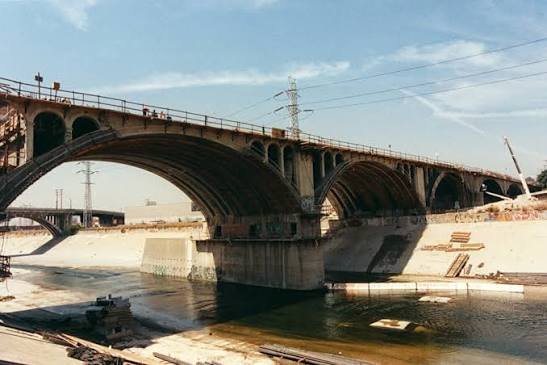
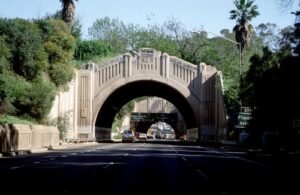
North Broadway Bridge launched an era of grand bridges in Los Angeles. When it was dedicated on October 16, 1911, with President William Howard Taft as an honored guest, it was the first monumental Beaux-Arts bridge built by the City of Los Angeles. It was also the longest and widest concrete arch bridge in California. Originally called the Buena Vista Viaduct, it carries North Broadway across the Los Angeles River between downtown’s Chinatown area and Lincoln Heights. Its stately Ionic columns, sculpted railings and rounded viewing balconies still greet travelers more than a century later, and it’s free to cross.
North Broadway Bridge Key Facts
| Detail | Information |
| Official name | North Broadway–Buena Vista Street Bridge |
| Original name | Buena Vista Viaduct (Buena Vista Street was later renamed North Broadway) |
| Location | Over the Los Angeles River and rail lines, between Chinatown/downtown Los Angeles and Lincoln Heights, California |
| Coordinates | Approx. 34.0705° N, 118.2265° W |
| Road | North Broadway |
| Owner | City of Los Angeles |
| Bridge type | Reinforced concrete arch bridge with open and closed spandrel arches |
| Designers | Homer Hamlin (city engineer) and Alfred F. Rosenheim (architect) |
| Construction | 1909–1911 |
| Dedicated | October 16, 1911, with President William Howard Taft as an honored guest |
| Total length | About 968 ft |
| Piers | 8 vertical piers |
| Style | Beaux-Arts, inspired by the City Beautiful movement |
| Special features | Sculpted concrete railing with octagonal balusters, 12 rounded viewing balconies, and paired fluted Ionic columns at each entrance |
| Distinctions | First monumental Beaux-Arts bridge built by Los Angeles; longest and widest concrete arch bridge in California when completed; first open-spandrel arch bridge in California |
| Historic status | Los Angeles Historic-Cultural Monument No. 907 (2008); determined eligible for the National Register of Historic Places |
| Toll | None |
| Time zone | Pacific Time: UTC−8 (PST), UTC−7 (PDT, second Sunday in March to first Sunday in November) |
Between Chinatown and Lincoln Heights
The North Broadway Bridge crosses the Los Angeles River just northeast of downtown. On the west side, it begins near Chinatown, with North Broadway continuing south into the heart of downtown. On the east side, it lands in Lincoln Heights, one of the oldest neighborhoods in Los Angeles.
The bridge runs along the eastern edge of Los Angeles State Historic Park, a large green space often called “the Cornfield.” The area beneath the bridge sometimes serves as a sheltered spot for film screenings, concerts and special events. From the bridge, visitors enjoy views of the downtown skyline rising beyond the park, along with Elysian Park’s hills to the north.
Beaux-Arts Elegance
The North Broadway Bridge was designed to make a grand statement:
- Entrances: Each end features two pairs of massive fluted Ionic columns on high square pedestals, topped by a cornice and balustrade, like the entrance to a classical building.
- Railings: A sculpted concrete railing with heavy, rounded octagonal balusters runs the length of the bridge.
- Balconies: Twelve rounded viewing balconies project from the sides, inviting walkers to pause and enjoy the view.
- Arches: The bridge rests on eight vertical piers in a combination of open- and closed-spandrel arches.
Its design reflects the City Beautiful movement of the early 1900s, which encouraged cities to build public works that were both useful and inspiring.
Length and Structure
- The bridge is about 968 feet long.
- When completed in 1911, it was the longest and widest concrete arch bridge in California.
- It was the first open-spandrel arch bridge in California. In this design, columns rise from the arches to support the deck, leaving open spaces that make the structure lighter and more graceful.
The bridge carried both streetcars and automobiles across the river and over the Southern Pacific railroad tracks.
Free to Cross
There’s no toll on the North Broadway Bridge. Tips for visiting:
- Drivers use North Broadway as a direct route between downtown and Lincoln Heights.
- Pedestrians can walk across and stop at the rounded balconies for views of the river and skyline.
- Cyclists often include the bridge in tours exploring Chinatown, Lincoln Heights and the Los Angeles River.
- Photographers love the classical columns at the entrances, especially in late-afternoon light.
Building the Buena Vista Viaduct
In the early 1900s, the neighborhoods east of the Los Angeles River were growing, but crossing the river and the busy railroad tracks was slow and difficult. The Eastside Improvement Association pushed for a modern, elevated crossing that could carry streetcars and automobiles over both the river and the tracks.
The city’s engineer, Homer Hamlin, worked with architect Alfred F. Rosenheim to design the new bridge. Rosenheim was a leading Los Angeles architect who also designed the 1907 Hamburger’s department store (later May Company, now the Broadway Trade Center) and the Hellman Building, both downtown landmarks.
Construction began in 1909, and the bridge was dedicated on October 16, 1911, as the Buena Vista Viaduct, named for Buena Vista Street, which later became North Broadway. The dedication was a major civic event, with President William Howard Taft as an honored guest. In keeping with the excitement over the Los Angeles Aqueduct then being built, the bridge was dedicated with water from the Owens River.
The First of LA’s Great River Bridges
The North Broadway Bridge was the first of a remarkable series of monumental bridges the City of Los Angeles built over the Los Angeles River between 1910 and 1933. Later bridges, many designed under city bridge engineer Merrill Butler, included the Fourth Street Viaduct and the original Sixth Street Viaduct.
The new crossing helped speed the growth of the neighborhoods east of the river. Traffic grew so heavy that in the late 1920s the city built the neighboring North Spring Street Viaduct to share the load.
A Recognized Landmark
The Los Angeles River bridges are one of the largest groups of historically significant bridges in the United States. In 2008, the North Broadway Bridge was designated Los Angeles Historic-Cultural Monument No. 907. It has also been documented by the Historic American Engineering Record and determined eligible for the National Register of Historic Places.
Things to Do Nearby
- Los Angeles State Historic Park, beside the bridge, offers lawns, walking paths, skyline views and community events.
- Chinatown, just west of the bridge, is known for its restaurants, shops and the colorful Central Plaza.
- Elysian Park, to the north, is Los Angeles’ oldest park and home to Dodger Stadium.
- Lincoln Heights, at the bridge’s east end, is one of the city’s oldest neighborhoods, with historic homes and local eateries.
- Olvera Street and El Pueblo de Los Angeles, a short trip south, preserve the birthplace of the city.
FAQs
Q1. Is there a toll on the North Broadway Bridge?
A. No. The North Broadway Bridge is free to cross.
Q2. How long is the North Broadway Bridge?
A. It’s about 968 feet long.
Q3. When was the North Broadway Bridge built?
A. It was built from 1909 to 1911 and dedicated on October 16, 1911.
Q4. What was the North Broadway Bridge originally called?
A. It was originally called the Buena Vista Viaduct.
Q5. Who designed the North Broadway Bridge?
A. It was designed by city engineer Homer Hamlin and architect Alfred F. Rosenheim.
Q6. What makes the North Broadway Bridge special?
A. It was the first monumental Beaux-Arts bridge built by Los Angeles and the longest and widest concrete arch bridge in California when it opened.
Q7. Did a president attend the North Broadway Bridge dedication?
A. Yes. President William Howard Taft was an honored guest at the 1911 dedication.
Q8. What does the North Broadway Bridge connect?
A. It connects the Chinatown area of downtown Los Angeles with Lincoln Heights across the Los Angeles River.
Q9. Is the North Broadway Bridge a historic landmark?
A. Yes. It was designated Los Angeles Historic-Cultural Monument No. 907 in 2008.
Q10. Can you walk across the North Broadway Bridge?
A. Yes. Sidewalks and rounded viewing balconies make it a pleasant walk.



Post Comment