Benicia-Martinez Bridge, Benicia, CA: Location, Length, Height, Toll, History & Facts
Benicia-Martinez Bridge is actually three bridges standing side by side across the Carquinez Strait. Two carry Interstate 680 and one carries trains. The two highway spans also share an unusual family story. The 1962 steel truss bridge is named for California State Senator George Miller Jr., and the sleek 2007 concrete bridge beside it honors his son, U.S. Congressman George Miller. The crossing links Benicia in Solano County with Martinez in Contra Costa County, and in 2007 it became the first bridge in Northern California with open road tolling. Drivers pay only heading north into Benicia: $8.50 in 2026. Walkers and cyclists cross for free on a separated path.

Benicia-Martinez Bridge Key Facts
| Detail | 1962 Span (Southbound) | 2007 Span (Northbound) |
| Official name | George Miller Jr. Memorial Bridge (named 1975) | Congressman George Miller Benicia–Martinez Bridge |
| Bridge type | Steel deck truss | Concrete segmental bridge |
| Opened | September 15, 1962 | August 25, 2007 (10:30 p.m.) |
| Construction | Not applicable | November 2001 to August 2007 |
| Cost | About $25 million | About $1.2 billion (full project, including interchanges and toll plaza) |
| Length | About 1.2 miles | About 7,435 ft main bridge; about 8,790 ft (1.7 miles) with approaches |
| Spans | Seven spans of 528 ft | Spans ranging from 275 ft to about 657 ft |
| Vertical clearance | About 138 ft | About 138 ft |
| Lanes | 4 southbound, with full shoulders | 5 northbound (12-ft lanes) with two 10-ft shoulders |
| Bike/pedestrian path | Yes (opened August 29, 2009) | No |
| Other Details | Information |
| Location | Carquinez Strait, between Benicia (Solano County) and Martinez (Contra Costa County), California |
| Coordinates | Approx. 38.0390° N, 122.1240° W |
| Highway | Interstate 680 |
| Railroad bridge | 1930 Union Pacific vertical-lift bridge between the two highway spans |
| Toll direction | Northbound only (collected in Martinez) |
| Car toll (2026) | $8.50 |
| Carpool toll | $4.25 (FasTrak only, weekday rush hours) |
| Payment | All-electronic (no cash) |
| Original toll (1962) | 25 cents |
| Annual toll-paid vehicles | About 19.8 million (FY 2022–23) |
| Distinction | First open road tolling in Northern California (2007) |
| Time zone | Pacific Time: UTC−8 (PST), UTC−7 (PDT, second Sunday in March to first Sunday in November) |
Three Bridges Over the Strait
The Benicia-Martinez crossing sits at the eastern end of the Carquinez Strait, where the strait opens into Suisun Bay and the Sacramento–San Joaquin River Delta. Three bridges stand side by side here:
- The 1962 steel truss bridge on the west carries southbound I-680 and the bike and pedestrian path.
- The 1930 Union Pacific railroad bridge in the middle carries freight trains and Amtrak passenger trains, including the Capitol Corridor and the California Zephyr. Its vertical-lift span rises to let tall ships pass.
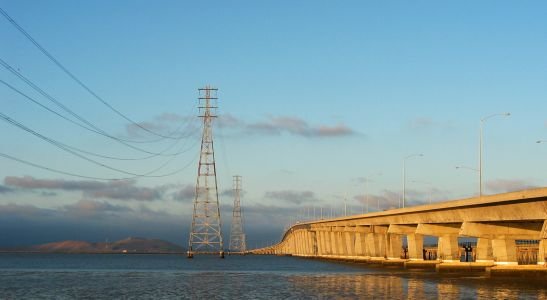
- The 2007 concrete bridge on the east carries northbound I-680.
On the north side, the bridges land in Benicia, which connects with I-780 toward Vallejo and I-680 north toward I-80 and Sacramento. On the south side, they land in Martinez, the Contra Costa County seat, with I-680 continuing south toward Walnut Creek and San Jose.
The 1962 Truss Bridge
The original Benicia-Martinez Bridge opened on September 15, 1962, replacing ferries that had carried travelers across the strait for more than a century.
- It’s a steel deck truss about 1.2 miles long, with the roadway running on top of the steel framework.
- It has seven main spans of 528 feet each.
- It gives ships about 138 feet of clearance.
- It cost about $25 million, and the first toll was just 25 cents.
The bridge was widened in 1991, and in 1975 it was named the George Miller Jr. Memorial Bridge, honoring the California state legislator from Contra Costa County.
The 2007 Concrete Bridge
By the 1990s, traffic on I-680 had outgrown the original bridge. Funded mainly by Regional Measure 1, the bridge toll program approved by Bay Area voters in 1988, a new parallel bridge was built to carry all northbound traffic. Construction began in November 2001, and the new bridge opened at 10:30 p.m. on August 25, 2007.
- It’s a cast-in-place concrete segmental bridge. Sections were built outward from each pier until they met in the middle.
- The main bridge is about 7,435 feet long, or about 8,790 feet (1.7 miles) including approaches.
- Its spans range from 275 feet to about 657 feet.
- Building it took about 190,000 cubic yards of concrete.
- It carries five 12-foot lanes with two 10-foot shoulders.
The full $1.2 billion project also built a new I-680/I-780 interchange in Benicia, rebuilt the Marina Vista interchange in Martinez, and opened a new toll plaza. That plaza introduced open road tolling to Northern California, letting FasTrak users drive through at highway speed. The new span was named the Congressman George Miller Benicia–Martinez Bridge, honoring George Miller Jr.’s son, who served in Congress for 40 years.
Paying the Toll
Tolls are collected only from northbound drivers, heading from Martinez to Benicia, at the toll plaza on the Martinez side. The southbound trip is free. The bridge is fully cashless.
| Payment method | Car toll (2026) |
| FasTrak | $8.50 |
| License plate account, one-time payment or invoice | $8.50 |
| Carpool (3+ people, FasTrak Flex) | $4.25 |
Tips for drivers:
- The carpool discount applies on weekdays during morning and evening rush hours for vehicles with three or more people using a FasTrak Flex tag set to “3+.”
- Tolls on the Bay Area’s state-owned bridges are scheduled to rise each year through 2030.
- Weekday afternoons can be busy northbound as commuters head toward Solano County and Sacramento.
Walking and Biking the Bridge
After the new bridge opened, the 1962 span was seismically retrofitted and converted to carry four southbound lanes plus a separated bike and pedestrian path. The path opened on August 29, 2009, closing a gap in the San Francisco Bay Trail.
- The path connects Benicia and Martinez and is free to use.
- From the bridge, you can watch Amtrak and freight trains cross the neighboring railroad bridge.
- Views stretch east over Suisun Bay toward the Delta and west down the Carquinez Strait.
- It’s often windy, so bring a jacket.
Things to Do Nearby
- Benicia Capitol State Historic Park preserves the building that served as California’s state capitol in 1853–1854.
- Benicia’s First Street has antique shops, galleries and waterfront restaurants.
- The John Muir National Historic Site in Martinez preserves the home of the famous naturalist.
- Martinez Regional Shoreline offers trails, a marina and views of the bridges.
- Carquinez Strait Regional Shoreline has hilltop trails with views over the strait.
FAQs
Q1. How much is the Benicia-Martinez Bridge toll in 2026?
A. The toll is $8.50 for cars, collected only on northbound trips into Benicia. Carpools pay $4.25 during weekday rush hours.
Q2. Is the Benicia-Martinez Bridge toll charged both ways?
A. No. Tolls are collected only northbound, at the toll plaza in Martinez.
Q3. Does the Benicia-Martinez Bridge accept cash?
A. No. Tolls are fully electronic, by FasTrak, license plate account, one-time payment or invoice.
Q4. How long is the Benicia-Martinez Bridge?
A. The 1962 span is about 1.2 miles long, and the 2007 span is about 1.7 miles long including approaches.
Q5. How high is the Benicia-Martinez Bridge?
A. Both highway spans give ships about 138 feet of vertical clearance.
Q6. When did the Benicia-Martinez Bridge open?
A. The original span opened on September 15, 1962, and the new northbound span on August 25, 2007.
Q7. Who is the Benicia-Martinez Bridge named after?
A. The 1962 span honors State Senator George Miller Jr., and the 2007 span honors his son, Congressman George Miller.
Q8. Can you walk or bike across the Benicia-Martinez Bridge?
A. Yes. A separated bike and pedestrian path on the 1962 span opened on August 29, 2009.
Q9. What is the bridge between the two highway spans?
A. It’s a 1930 Union Pacific railroad bridge with a vertical-lift span, used by freight and Amtrak trains.
Q10. What highway crosses the Benicia-Martinez Bridge?
A. Interstate 680 crosses the bridges between Martinez and Benicia.

Post Comment